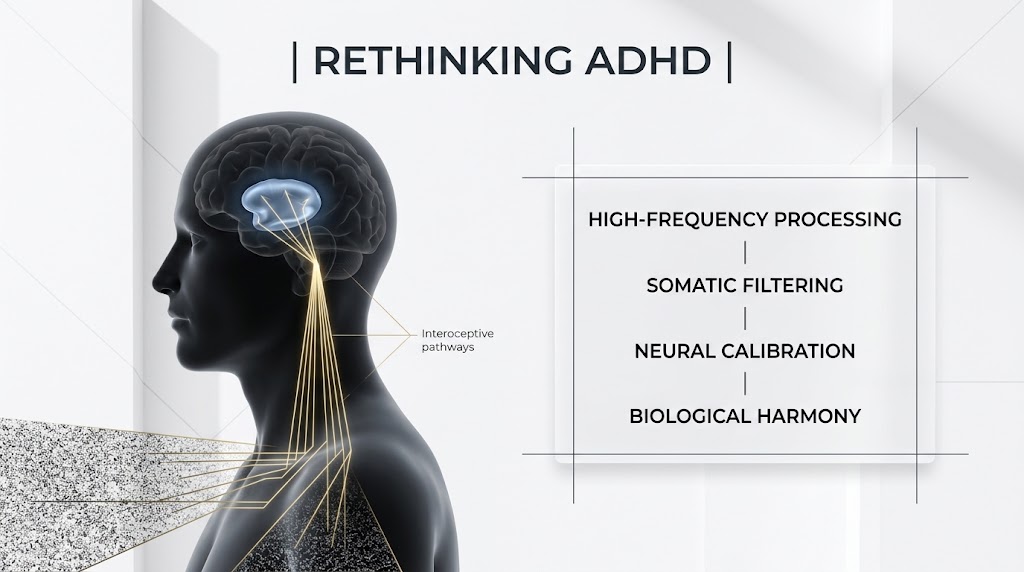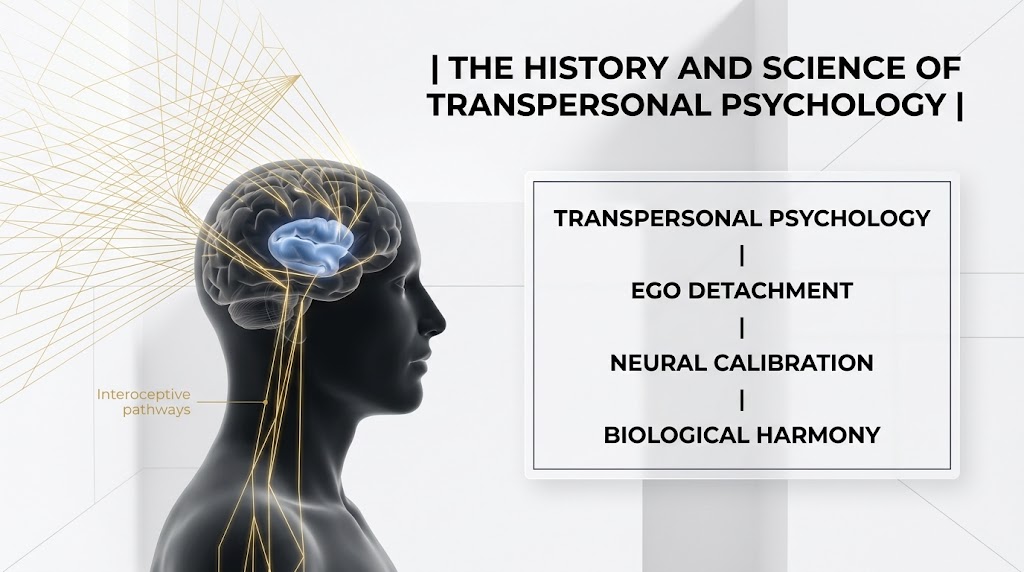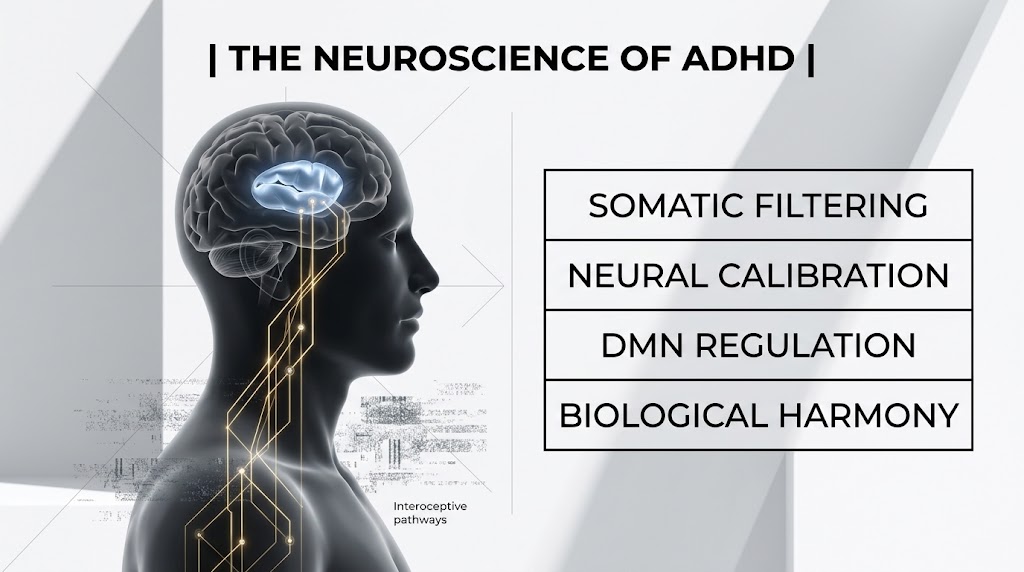

What are psychedelics? Research scientist, Dr of natural medicine, and yogi Nitasha Buldeo explores these tools as psychoplastogens. Through the lens of interoceptive neuroscience, she explains how they promote neuroplasticity to restore biological harmony. This pragmatic approach moves beyond myths to focus on functional health. Reclaim power and authority over your body by resetting neural …

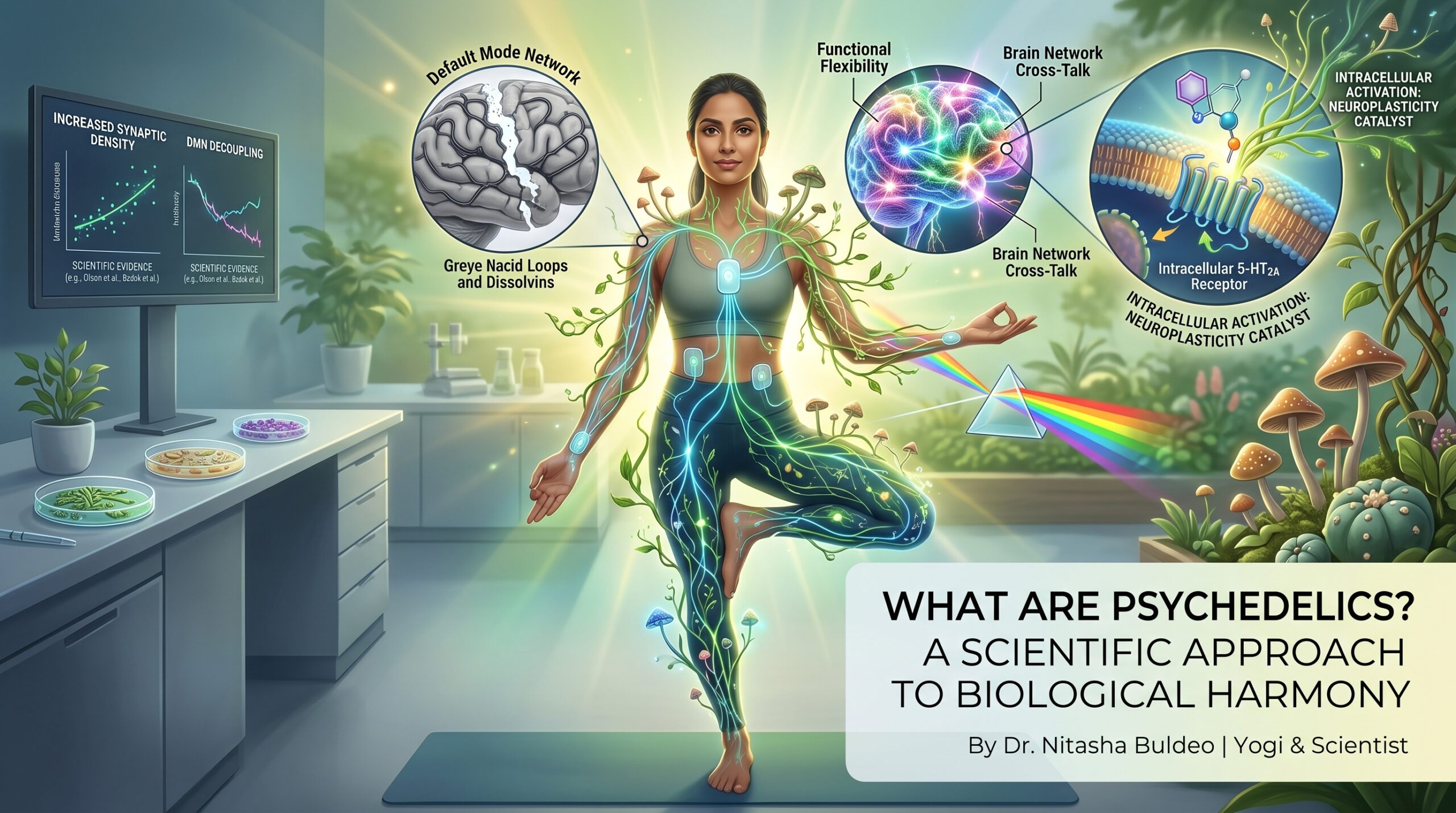
In the study of functional health, we view the body as an integrated system requiring constant recalibration to maintain biological harmony. As a Research Scientist, Doctor of Natural Medicine, and Yogi, I examine tools that allow us to reclaim authority and power over our internal states. Psychedelics, recently classified by neuroscientists as psychoplastogens, are among the most potent tools for restoring this internal balance.
Far from being mere “hallucinogens,” these substances are high-precision biological catalysts that trigger rapid structural and functional changes in the brain.
The Neuroscience of Psychoplastogens
The core mechanism of psychedelics lies in their ability to promote neuroplasticity—the brain’s capacity to rewire itself.
1. Intracellular Activation
Recent breakthroughs in molecular biology have revealed that psychedelics do not just sit on the surface of brain cells. Unlike serotonin, psychedelics are membrane-permeable; they enter the neuron to activate intracellular 5-HT2A receptors. This internal activation is what triggers the growth of new dendrites and synapses, allowing for a “reset” of stagnant neural patterns.
2. Brain Network “Cross-Talk”
A 2026 mega-analysis of over 500 brain imaging sessions confirmed that psychedelics produce a common pattern of neural activity:
- Reduced Rigidity: Connections within rigid networks (like the Default Mode Network) weaken.
- Increased Communication: Signals cross boundaries between usually separate systems, fostering unprecedented “cross-talk”.
This process breaks down the mental “loops” often seen in chronic depression and anxiety, restoring the brain’s functional flexibility.
Interoceptive Neuroscience and Body Awareness
At the heart of my work is interoceptive neuroscience—the study of how the brain perceives the body’s internal state. Psychedelics significantly alter this perception, often leading to a profound shift in self-awareness.
- Somatic Insight: Clinical reports indicate that substances like Ayahuasca and psilocybin increase interoceptive feelings, helping individuals sense their bodies as “safe and trustworthy” again.
- Biological Harmony: By dampening the hyper-rigid Default Mode Network (DMN), these tools allow the brain to process internal signals without the filters of past trauma or negative self-narrative.
Clinical Applications and Results
The pragmatic utility of these substances is now supported by large-scale randomized controlled trials (RCTs).
| Condition | Clinical Finding | Evidence Strength |
| Major Depression | Large effect size (Hedges’ g ≈ 1.05) with sustained benefits up to 6 months. | High (Meta-analyses) |
| PTSD | 83% of participants in key trials no longer met diagnostic criteria after MDMA therapy. | High (Phase III Trials) |
| Addiction | Significant reduction in alcohol and substance use via enhanced psychological flexibility. | Moderate |
Reclaiming Your Internal Power
Psychedelics are not a “magic” cure, but a pragmatic intervention. They provide the biological opening needed to shift from a state of discord to a state of efficiency. For a yogic samurai, these are tools used with precision and intent to maintain biological harmony and mental clarity.
By understanding the science of interoception and neuroplasticity, we move past mystical labels and into the realm of functional health and internal authority.
Dr. Nitasha Buldeo Research Scientist, Dr of Natural Medicine, and Yogi
References
- Bzdok, D., Girn, M., et al. (2026). An international mega-analysis of psychedelic drug effects on brain circuit function. Nature Medicine.
- De Gregori, M., et al. (2025). Efficacy and safety of psychedelics in mental disorder cases: An umbrella review of meta-analyses. Journal of Clinical Psychopharmacology.
- Olson, D. E., et al. (2023/2026). Psychedelics promote neuroplasticity through activation of intracellular 5-HT2A receptors. Science.
- PTSD UK. (2024/2026). Psychedelic-assisted therapy and its impact on alexithymia and emotional regulation.
- Vargas, M. V., et al. (2023). Psychedelics and consciousness: Distinctions and opportunities in interoceptive research. PMC.