
ADHD is not a deficit of attention; it is a mechanical disruption in somatic filtering. Dr. Nitasha Buldeo explores how interoceptive neuroscience redefines ADHD as a mapping error in the insular cortex. By combining neuro-somatic integration with precision energy healing, you can rebuild your internal architecture. Reclaim your authority, eliminate biological friction, and achieve lasting …

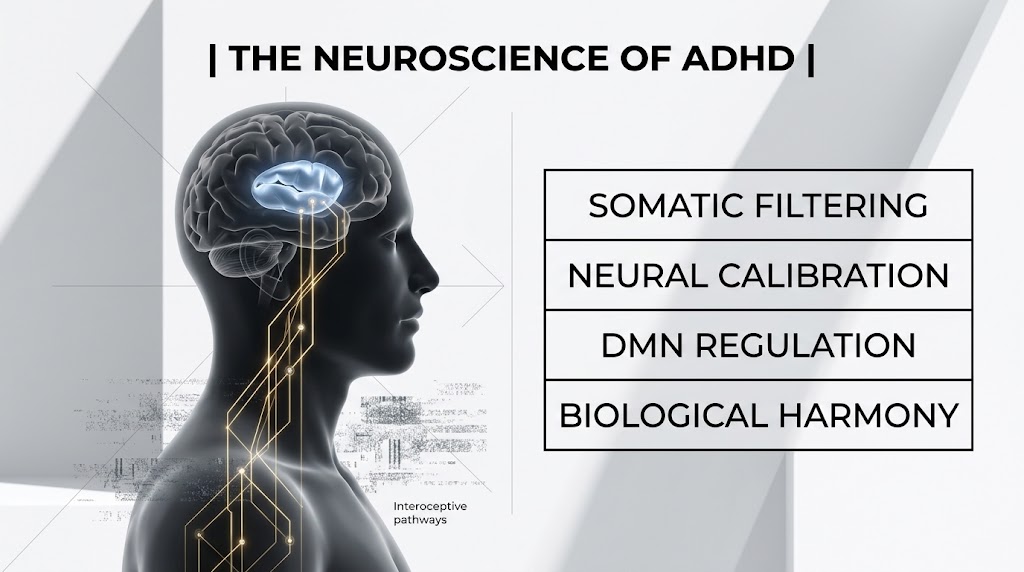
ADHD is commonly misunderstood as a psychological deficit of attention. It is a mechanical disruption in somatic filtering. The brain cannot efficiently regulate the continuous influx of sensory and internal data. This creates systemic biological friction. From the perspective of interoceptive neuroscience, restoring focus requires precise neurological and somatic intervention to rebuild the brain’s internal architecture.
The Interoceptive Mechanics of ADHD
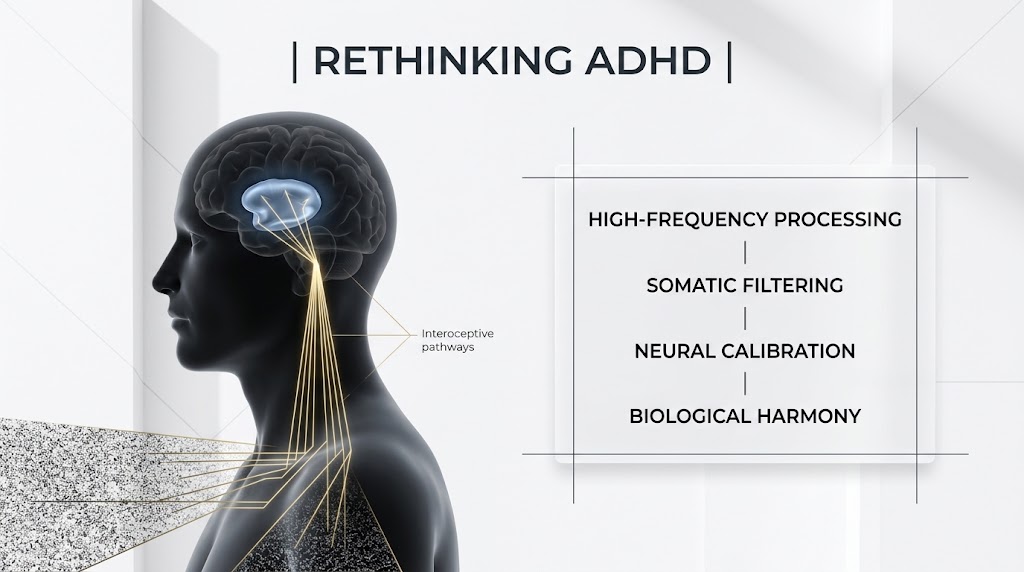
Interoception is the transmission of data from the body’s internal systems to the brain. It forms the biological foundation of human presence. In a highly regulated system, the insular cortex accurately interprets signals like heart rate, respiration, and muscular tension.
In ADHD, this interoceptive mapping system is inefficient.
- Somatic Noise: The insular cortex is overwhelmed by unfiltered internal data.
- Default Mode Network (DMN) Hyperactivity: Because the body provides an unstable anchor, the mind scans continuously. It cannot lock onto the present moment.
- Autonomic Dysregulation: The sympathetic nervous system remains perpetually engaged to compensate for the lack of grounding, draining metabolic resources.
The Utility of a Neuro-Somatic Approach
Standard protocols often rely heavily on chemical dopamine modulation. While effective for immediate symptom management, they do not resolve the underlying somatic mapping error.
Targeting interoceptive awareness addresses the root structural inefficiency. It trains the nervous system to filter data at the somatic level. This approach eliminates the systemic noise that causes hyperactivity and inattention. It creates sustained functional power rather than temporary chemical focus.
Clinical Integration at nitashabuldeo.com
At nitashabuldeo.com, we treat attention and focus as biological outputs. We integrate interoceptive neuroscience with precise energy healing to recalibrate the nervous system.
Interoceptive Neuroscience
We utilize the Path of Neuro-Somatic Integration to rebuild the brain’s internal map. Through disciplined, high-precision Interoceptive Yoga, the patient trains the insular cortex to process internal data accurately. We build true embodiment. The body becomes a highly calibrated, stable anchor for the mind, effectively shutting down DMN hyperactivity.
Energy Healing and Autonomic Recalibration
Biology is a manifestation of frequency. We apply targeted energetic interventions to modulate the vagus nerve and shift autonomic tone.
| Intervention | Biological Action | Functional Result |
|---|---|---|
| Acoustic Sound Healing | Specialized singing bowls emit precise frequencies to reset neural oscillations. | Calms DMN hyperactivity and stabilizes brainwave patterns. |
| Marma Acupuncture | Mechanical pressure on precise anatomical junctions stimulates peripheral mechanoreceptors. | Forces an update to the interoceptive map and downregulates sympathetic overdrive. |
| Somatic Integration | Grounding the shifts through disciplined physical movement. | Long-term biological harmony and sustained neural focus. |
Reclaiming Your Authority
Focus is the byproduct of a regulated nervous system. By treating ADHD as a biological inefficiency, we restore your capacity for sustained concentration. Rebuild your internal architecture. Reclaim absolute authority over your internal state and eliminate systemic noise.
Dr. Nitasha Buldeo
Research Scientist, Doctor of Natural Medicine, and Yogi
References
- Buldeo, N. Interoception: A measure of Embodiment or Attention? International Body Psychotherapy Journal.
- Garfinkel, S. N., et al. (2016). Knowing your own heart: distinguishing interoceptive accuracy from interoceptive awareness. Biological Psychology.
- Christoff, K., et al. (2016). Mind-wandering as spontaneous thought: a dynamic framework. Nature Reviews Neuroscience.