
Sitali Pranayama is the science of direct thermal regulation. Research scientist and yogi Dr. Nitasha Buldeo provides instructions from Asana Pranayama Mudra Bandha on using this cooling breath to treat hot flashes. Scientific research confirms up to a 30% reduction in symptoms through parasympathetic activation. Reclaim authority and power over your body by achieving biological …

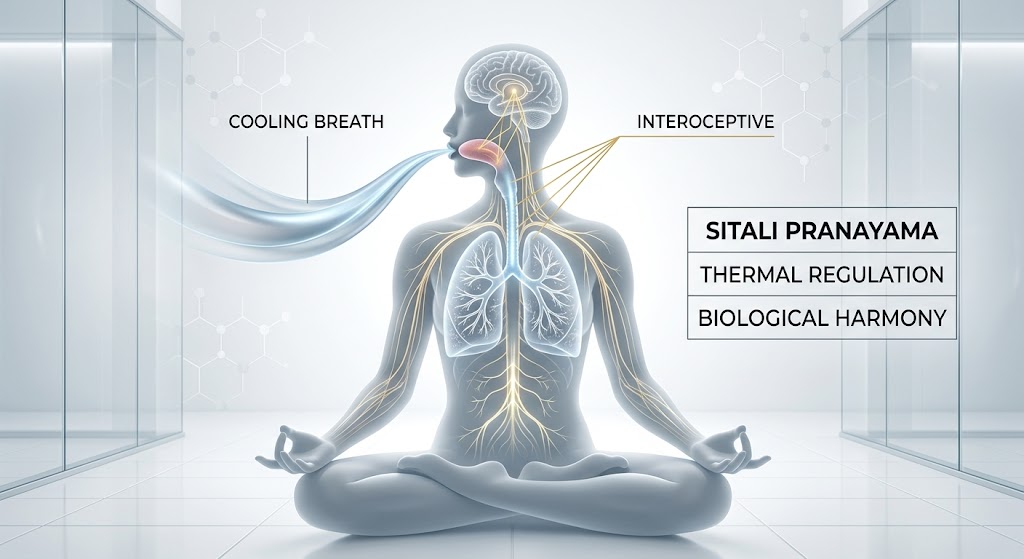
In the pursuit of biological harmony, we must utilize tools that allow us to reclaim authority and power over our internal states. As a Research Scientist, Doctor of Natural Medicine, and Yogi, I view Sitali Pranayama (Cooling Breath) as a high-precision biological intervention for resetting the body’s thermostat. From the perspective of interoceptive neuroscience, this practice is a pragmatic method for correcting “thermoregulatory prediction errors” that manifest as hot flashes.
Detailed Instructions: Sitali Pranayama
According to the systematic manual Asana Pranayama Mudra Bandha (APMB), the practice should be approached with discipline and specific physical alignment.
1. Preparation (Asana)
- Posture: Sit in a comfortable meditative asana, such as Padmasana (Lotus) or Siddhasana (Accomplished Pose), ensuring the head, neck, and spine are in a straight line.
- Mudra: Place the hands on the knees in Chin or Jnana Mudra.
- Environment: Ensure the air is clean and close to body temperature to avoid lung irritation.
2. Technique (Pranayama)
- The Tongue: Extend the tongue outside the mouth as far as comfortable.
- The Tube: Fold the sides of the tongue up to form a narrow tube or “bird’s beak”. If you are unable to do this then keep tongue in mouth and purse lips like you are about to kiss.
- The Inhalation: Draw the breath in slowly and deeply through this tube or the pursed lips, making a subtle hissing sound, similar to drinking through a straw.
- Thermal Awareness: Focus on the sensation of icy cold air crossing the tongue and entering the mouth and lungs.
- Retention (Kumbhaka): At the end of the inhalation, withdraw the tongue and close the mouth. Retain the breath (Antar Kumbhaka) for a few seconds.
- The Exhalation: Exhale slowly and completely through the nostrils.
3. Advanced Integration (Bandha)
For advanced practitioners, perform Jalandhara Bandha (Chin Lock) and Mula Bandha (Root Lock) during the internal breath retention phase to further concentrate the cooling energy and stabilise the nervous system.
The Neuroscience of Thermal Regulation
Hot flashes are often caused by a “prediction error” in the brain’s insular cortex, which incorrectly signals that the body is overheating. Sitali Pranayama provides a direct, cooling signal to the brain, helping it update its internal map.
Research and Evidence
- Autonomic Regulation: A 2025 systematic review confirmed that consistent pranayama practice (8–12 weeks) reduces hot flash frequency and severity by up to 30%.
- Somatic Impact: Clinical trials indicate that Sitali reduces hot flash intensity when practiced immediately at the onset of a flash by activating the parasympathetic nervous system.
- Biological Harmony: Research suggests these techniques work by regulating the hypothalamic-pituitary-adrenal (HPA) axis and reducing inflammatory markers that spike during hormonal transitions.
- Symptom Score Reduction: Specific studies on restorative practices, including cooling breath, have shown a 34.2% decrease in mean hot flush scores.
Summary of Practice
Sitali Pranayama is a results-driven tool for the modern yogic samurai. It moves beyond mystical definitions into the realm of functional health and internal power. By mastering this “inner air-conditioning,” you achieve biological harmony and maintain peak efficiency throughout any transition.
Dr. Nitasha Buldeo Research Scientist, Dr of Natural Medicine, and Yogi
References
- Mills, S. (2026). Yoga for Women’s Health: Systematic Reviews and Clinical Outcomes.
- Saraswati, S. S. (2008/2026). Asana Pranayama Mudra Bandha. Bihar School of Yoga.
- Yogajala. (2026). What New Research Reveals About Yoga For Perimenopause and Hot Flashes.
- Saved Information: Personal Pillars and Aesthetic.